There’s a long and messy history of the medical system of care getting it wrong when it comes to human sexuality. We only need to look at the way Kink has been treated by doctors, psychiatrists, and mental health clinicians and the diagnostic manuals they live by.
Which brings us to the DSM.
We can’t talk about the over-pathologisation of desire without talking about the role the psychiatric ‘bible’ played (and continues to play) in shaping how sexuality is viewed and judged, both in clinical settings and the wider world.
Let’s talk about why this still matters, and why unfortunately, it’s still happening now… in therapy rooms, psych assessments, courtrooms, and in media coverage.
A quick DSM introduction
The DSM (Diagnostic and Statistical Manual of Mental Disorders) is the textbook many mental health professionals in countries like Australia and the US use to diagnose psychological conditions. It can inform everything from clinical decisions, to insurance claims, and treatment access.
And for a long time, if you enjoyed pain with your pleasure, or played with power in consensual ways, the DSM would likely have named this a disorder.
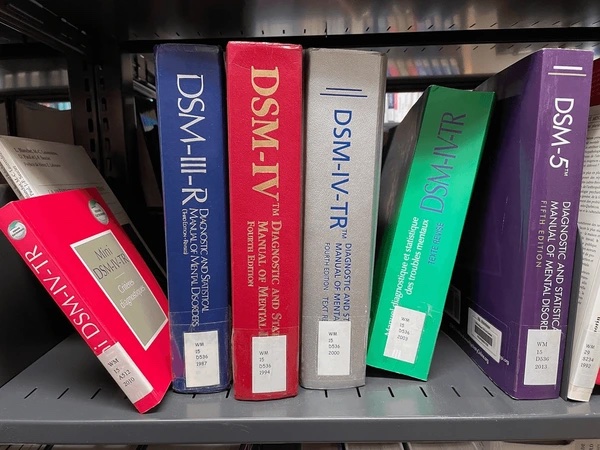
Before the release of the DSM 5 (2013), there was no clear line drawn between sexual behaviour that falls outside societal norms yet are consensual and enjoyablye (like Kink or BDSM) and clinically diagnosable sexual disorders. Everything got placed in the same basket.
In the DSM 5, a distinction was finall made: a paraphilic interest (a term they use for non-mainstream sexual desires) is not considered a disorder unless it causes significant distress or harm to the physical and psychological wellbeing of individuals, or is otherwise illegal in some way.
This was an important step forward. It recognised that people can have diverse or unconventional sexual interests and be healthy and happy.
But that nuance doesn’t always make it into the therapy room, or into the minds of professionals shaped by outdated frameworks.
Kink was (and often still is) treated like a problem
Unfortunately, kinky folks are still being hurt by this legacy today.
- Clients are being told their desire to be dominated or inflict consensual pain is a trauma response or the sign of something sinister
- Survivors who find healing in power exchange dynamics are being told their retraumatising themselves
- Parents can still face judgement if their sexual preferences are brought up in family court
- Therapists can still freeze up or make assumptions about clients when they don’t have the right knowledge in this area
- People are still misdiagnosed, misunderstood or turned away from services who don’t understand what is actually going on.
The clinical world still has a way to go to fully catch up to our real-world, lived experience understanding.

Pathologising of our sexual experiences is still happening
Let’s talk about the practical fallout from labelling desire as dysfunction
When clinicians are trained to equate consensual kink with pathology, they miss so much, and they reinforce harmful stigmas.
For queer clients, neurodivergent clients, survivors, for people in non-monogamous or non-traditional relationships, and folks who enjoy playing with power, pain or submission in their sex lives, this conversation matters.
It matters because a therapist’s response to someone’s kink can either be validating, or retraumatising. It can help someone make peace with their desires, or send them further into feelings of shame.
It can mean the difference between a safe, understanding space and a room that echoes with every other experience of being misunderstood.
When we get it wrong:
- People stay silent in sessions, fearing judgement. That means they don’t get to work through shame, understand their patterns, or access meaningful support.
- Clinicians miss the chance to affirm consent-based exploration and instead reinforce the very structures of power, control, and fear that clients are trying to break free from.
- Healing gets harder, slower, less embodied.
We’re not talking about obscure case studies. We’re talking about your friends, your partners, your clients. We’re talking about people being told there’s something wrong with them for how they feel pleasure, how they come home to their bodies, how they survive and thrive.
And all of this? It’s entirely avoidable.
Pleasure is not pathology
Consensual Kink, BDSM and other forms of sexual expression are absolutely not the red flags the medical world held up for so long.
They are expressions of self. They are ways for people to connect, release, and enjoy their body and their connection to other humans.
They are a part of human sexuality.
So, what needs to change?
If you’re a professional, working with folks who may share about different forms of sexual expression:
- Unlearn what the outdated textbooks have taught you
- Do the reading. Some places to start include:
- Smart Sex Resource
- Kink Academy
- Loving BDSM
- Conscious Polyamory
- Multiamory (includes a podcast)
- Esther Perel – one of the leading sexologists
- Get supervision with a sex-positive, kink-affirming practitioner
- And, most of all, listen. Listen to learn and understand someone’s experience. Listen with curiosity. Listen without assumption and without pathologising.
If you’re someone seeking professional support:
- You do not have to justify your desires
- You do not owe your therapist a trauma story to “explain” your kink
- You have the right to feel safe, seen, and affirmed
- And, if you don’t? You can absolutely leave and find another space that can hold safety and understanding with you.
Diagnostic tools are not neutral
I feel it’s important to also name that frameworks like the DSM don’t exist in a vacuum. They reflect cultural norms, and these norms are shaped by white supremacy, patriarchy, Christian moralism, and centuries of fear around bodies, autonomy, and sexuality.
What brings you home to yourself?
If you’re someone who’s been made to feel ashamed, confused, or silenced about your desire, it’s so important that you have access to spaces where your pleasure, your questions, and your full self can be met with respect, curiosity, and care. Where you don’t have to shrink or explain away the parts of you that feel most alive.
Therapy can be that space, when it’s held with nuance, compassion, and a deep understanding of the role of pleasure and desire in our lives.
If this speaks to you, I’m here. This is a space where your desire and your whole self are absolutely welcome.
For Practitioners: I offer sex-positive, kink-affirming supervision to counsellors and therapists who want to expand their knowledge and skills in this area.